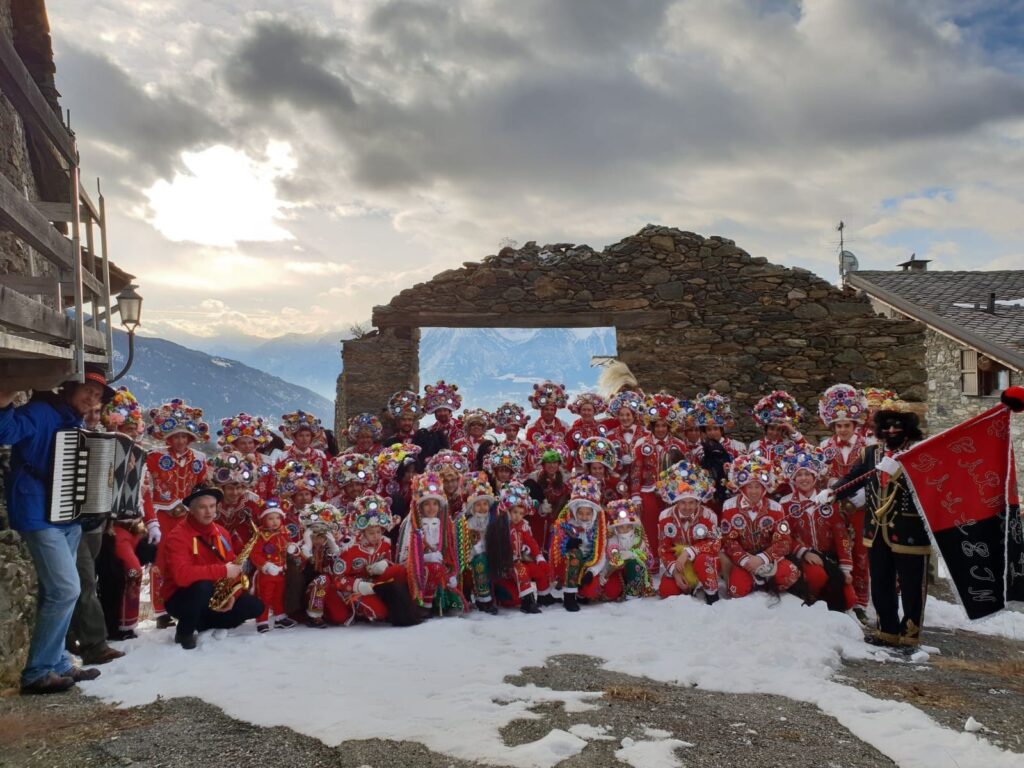
Taking place in Allein, a small village of 300 inhabitants located in the Grand Saint-Bernard Valley, this tradition born from the passage of Napoleon’s troops in May 1800 has been passed down for generations. The main figure of this Carnival is the ‘Landzetta.’ This costume, representing a strange and somewhat unsettling figure, recalls the uniforms of Napoleon’s troops, as evidenced by the headgear worn diagonally.
These costumes, consisting of pants and a tailcoat-shaped jacket, both in red fabric with sequins and beads, are entirely hand-embroidered by the ladies of the village. Depicting flowers and animals, symbols of the end of winter and the beginning of spring, the costumes reflect sunlight to ward off evil spirits with their 19 mirrors. The face covered by a mask, the reveler holds a horsehair tail in hand and is equipped at the waist with a belt with a bell.
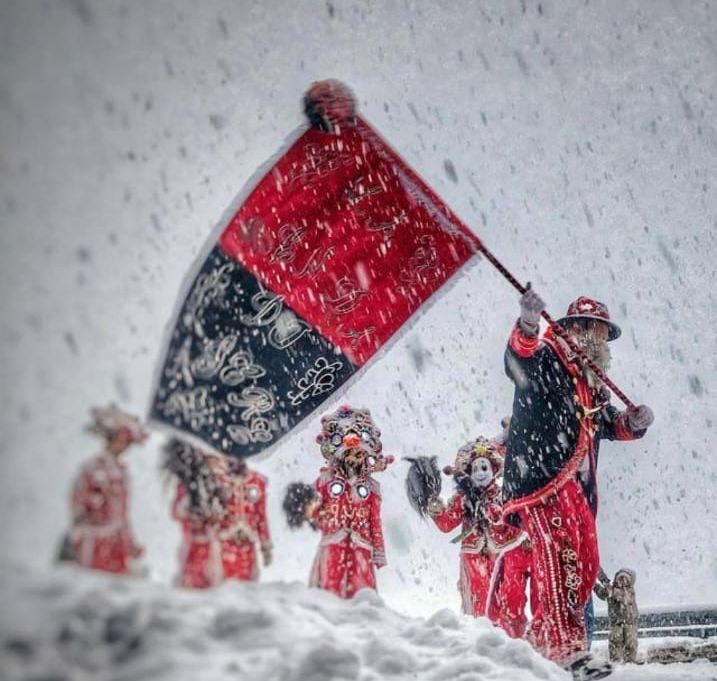
In addition to the Landzettes, other characters are present: the ‘Guedda,’ who has the task of guiding the procession throughout the country; the harlequins, more cheerful and less playful figures; the ‘Joueurs’ who announce the arrival in the country.
On Carnival days, villagers welcome the procession into their homes, offering food and drinks in exchange for joy transmitted through dances, songs, jokes, and rounds.
The Benda Di Carnival d’Allein can be found on Saturday, February 17, during the opening parade at 2:30 PM and the Carnival Parade of Lights at 8:30 PM.