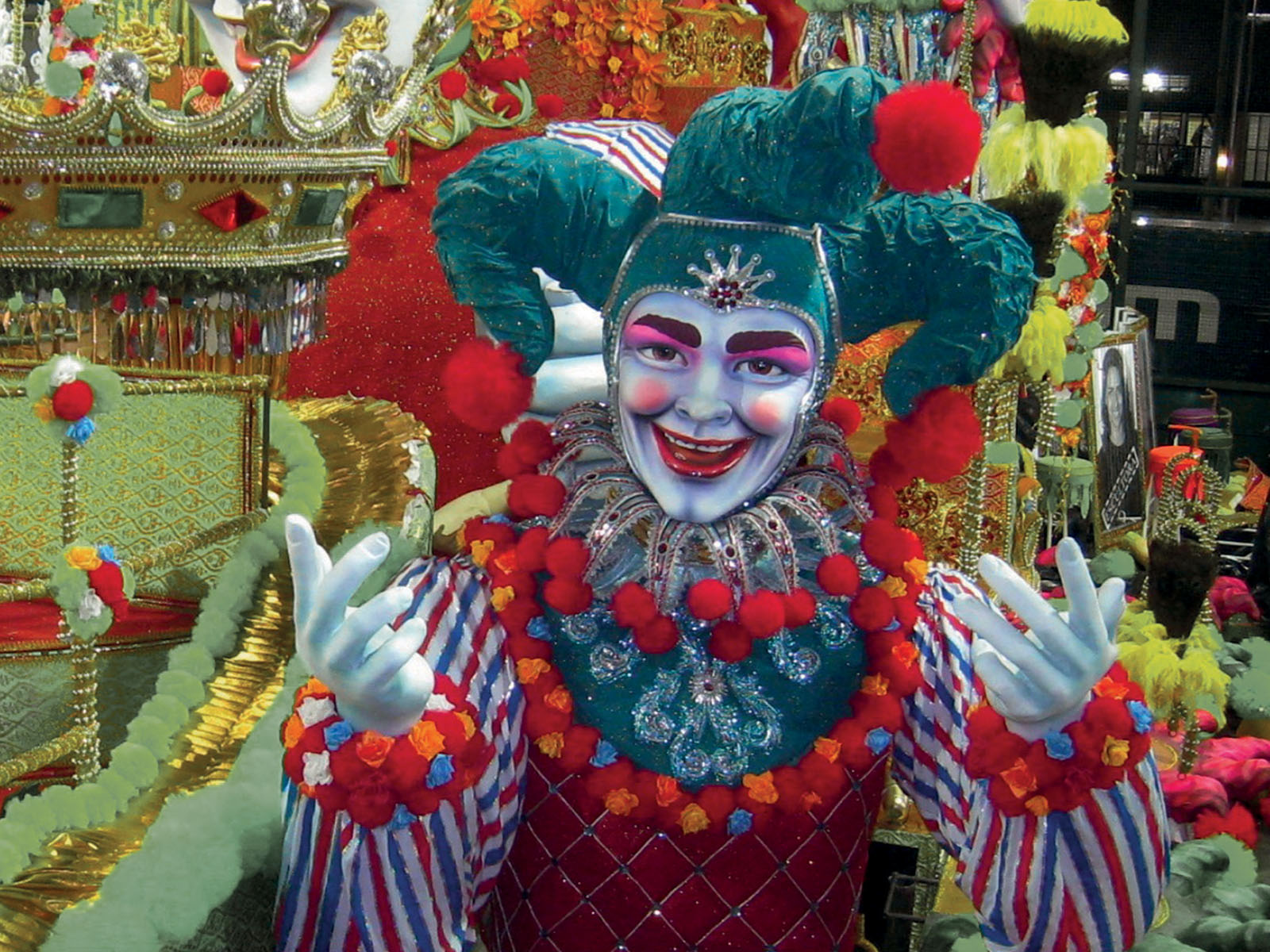
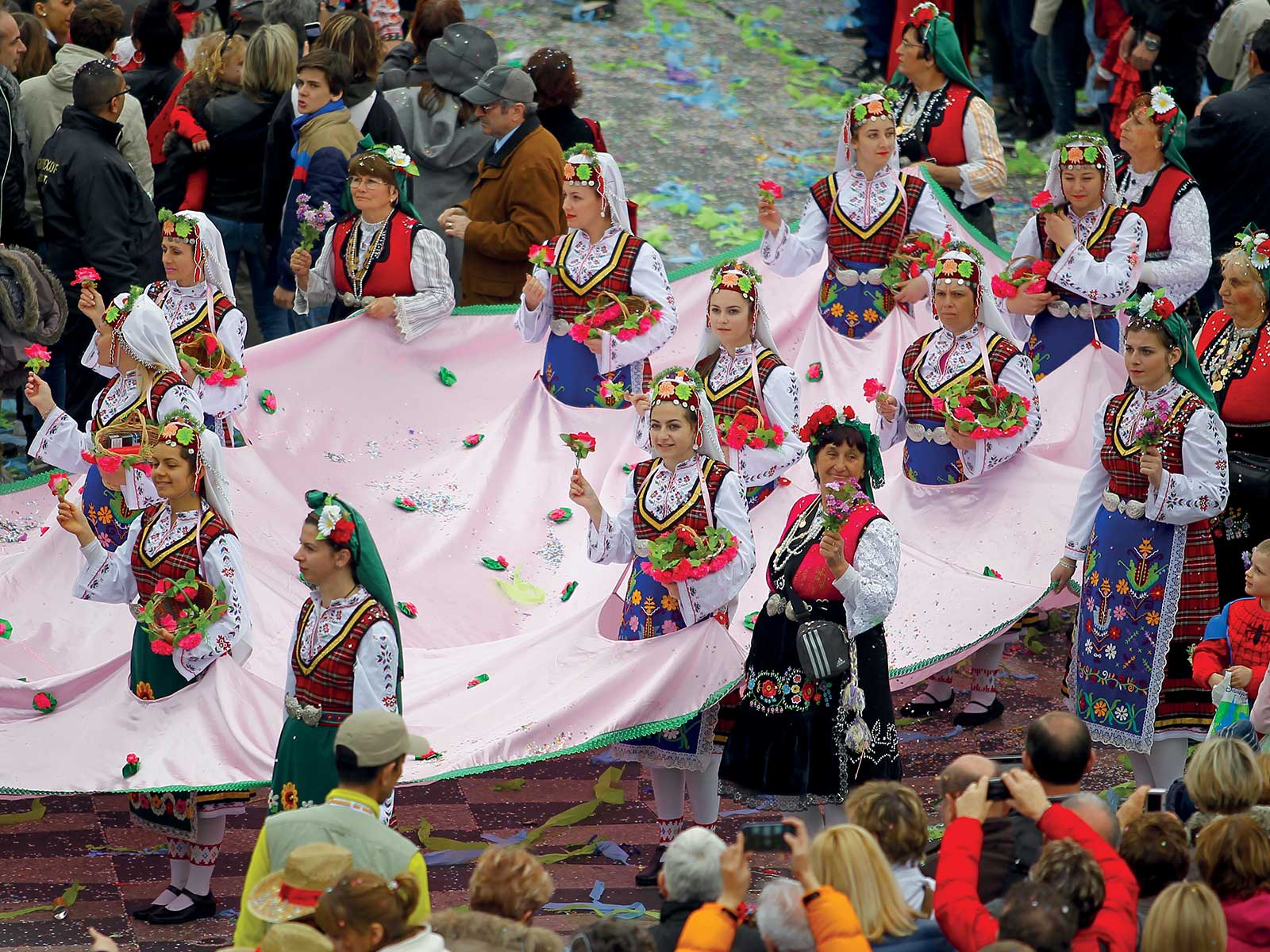
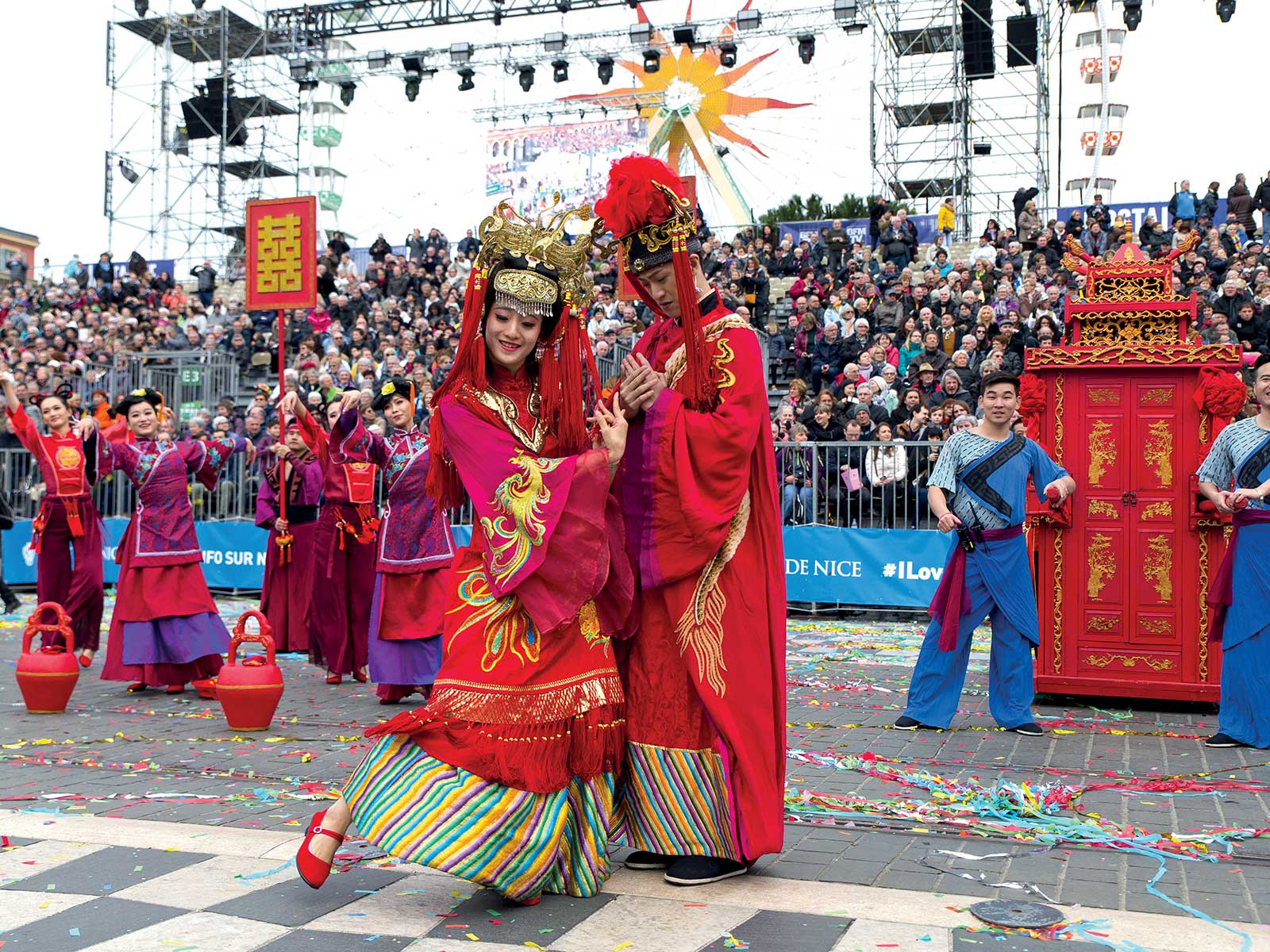
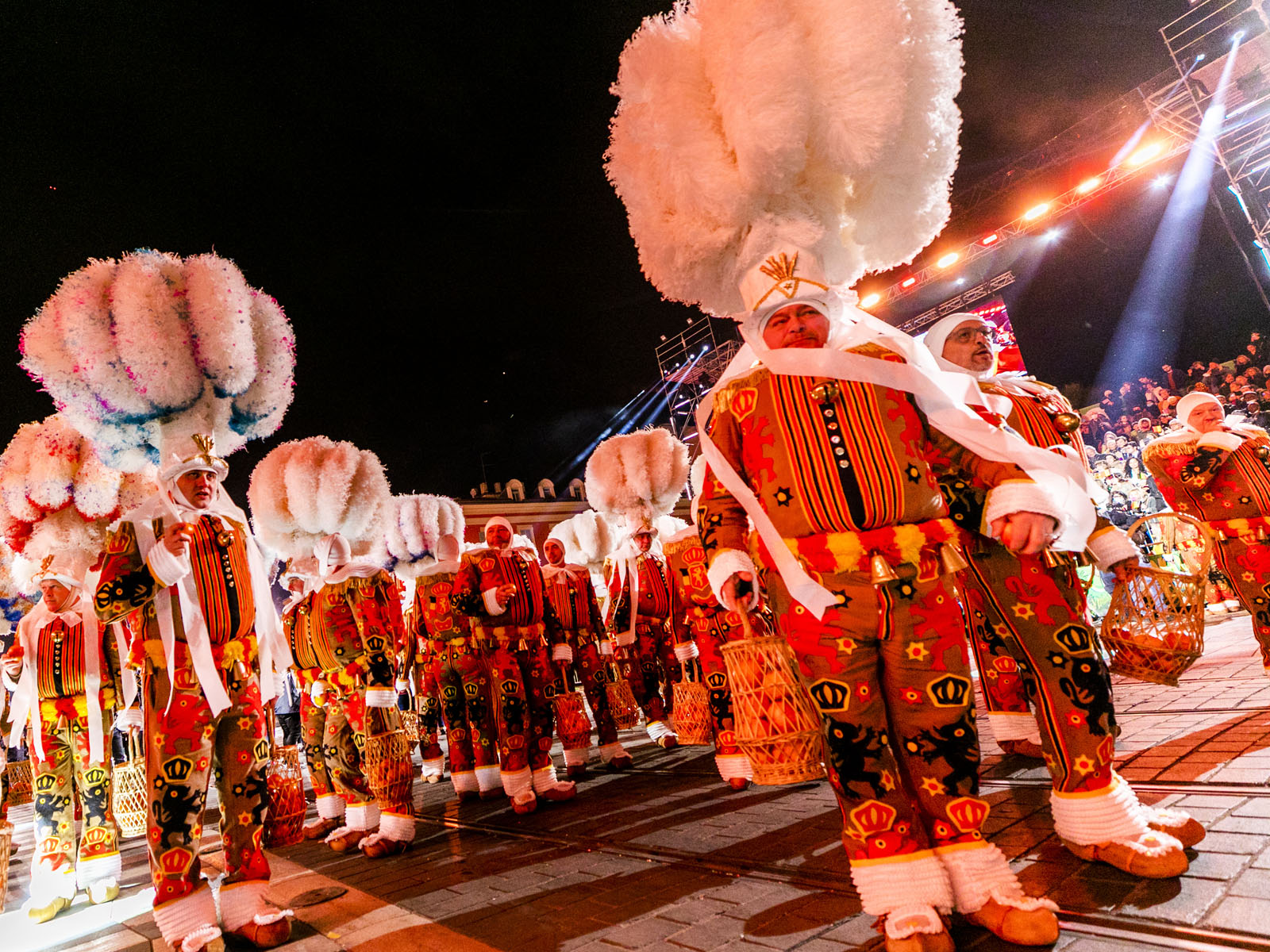
Each parade takes place on Place Masséna and around the Albert 1er garden, and includes large floats, giant automatons, animated elements, a hundred or so giant heads, magnificent street art troupes, costumed groups and music from all over the world.
Nice is considered the 3rd largest famous Carnival in the world after Rio de Janeiro and Venice, and has served as a model for all major festive parades.
Some of the biggest floats in the world
Each year, lots of floats decorated and brought to life under the theme of the season parade to the beat of street art troupes and musical groups from various backgrounds (from all over the world), all in a colourful, festive family atmosphere.
The floats are the result of a range of influences. The illustrator (ymagier) drives the idea, the carnival creator, a craftsman-artist, creates the float and moving elements, then the artistic coordinator ensures the transition to 3D and respects the requirements of such an event.
While the pasteboard aspect remains, the materials and techniques are fully 21st-century with one rule : inventiveness and creativity.
During the parade, the public can admire the King, Queen, their subjects, and the extravagant parades of floats and giant heads.
In the evening, the parades light up and move to the beat of music groups and visual entertainment, the carnival floats igniting the hearts of spectators.


The Royal Family
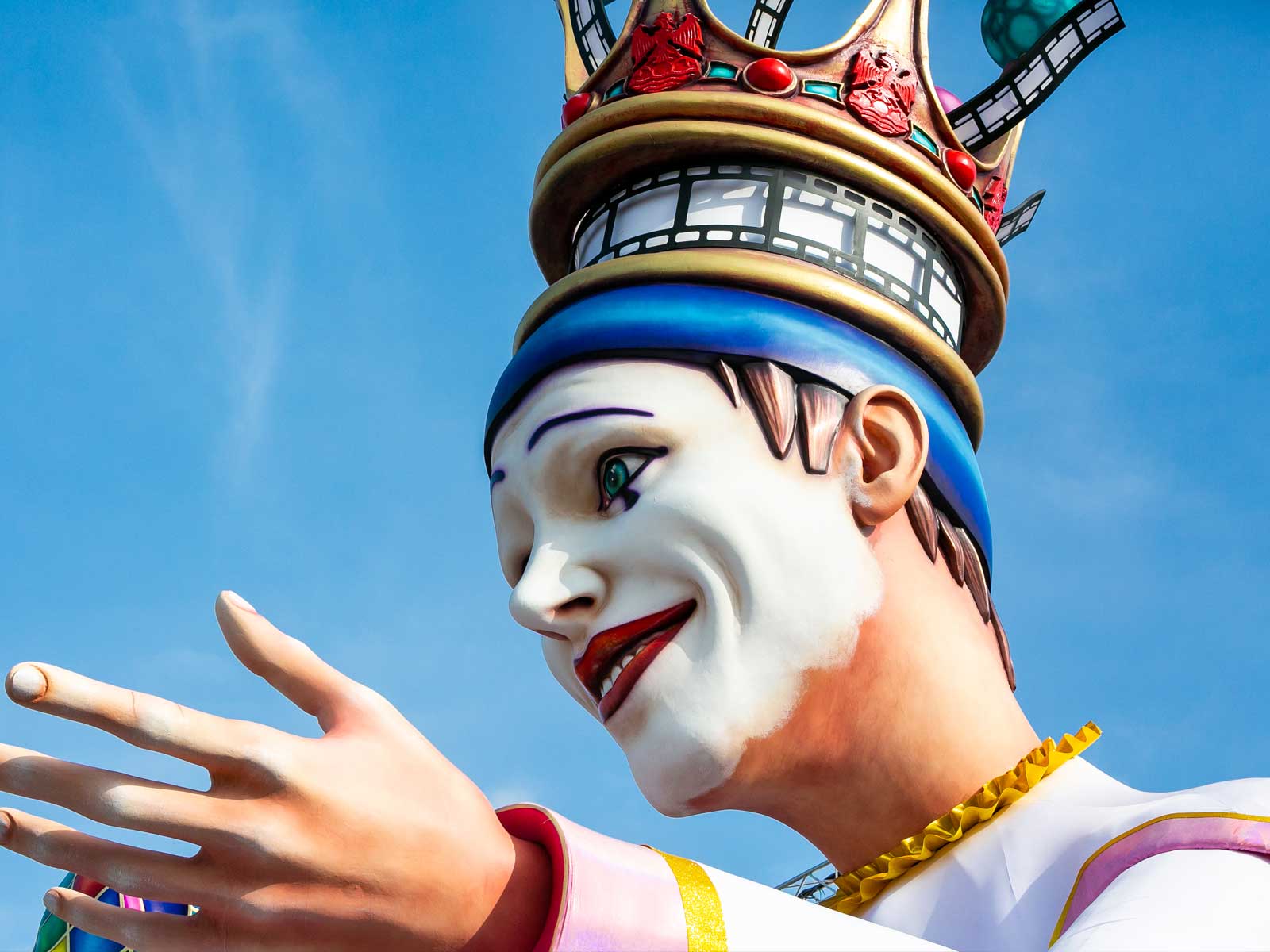
The King
Before the start of the carnival, His Carnival Majesty arrives at Place Masséna to announce the opening of these celebrations by taking the keys to the city. The king will be enthroned there for the duration of the carnival. He traditionally parades at the head of the procession.
The King’s float is a creation that stands out from the rest, rising to about 15 m high. In 2014, a record of 17 m was reached for the “King of Gastronomy”.
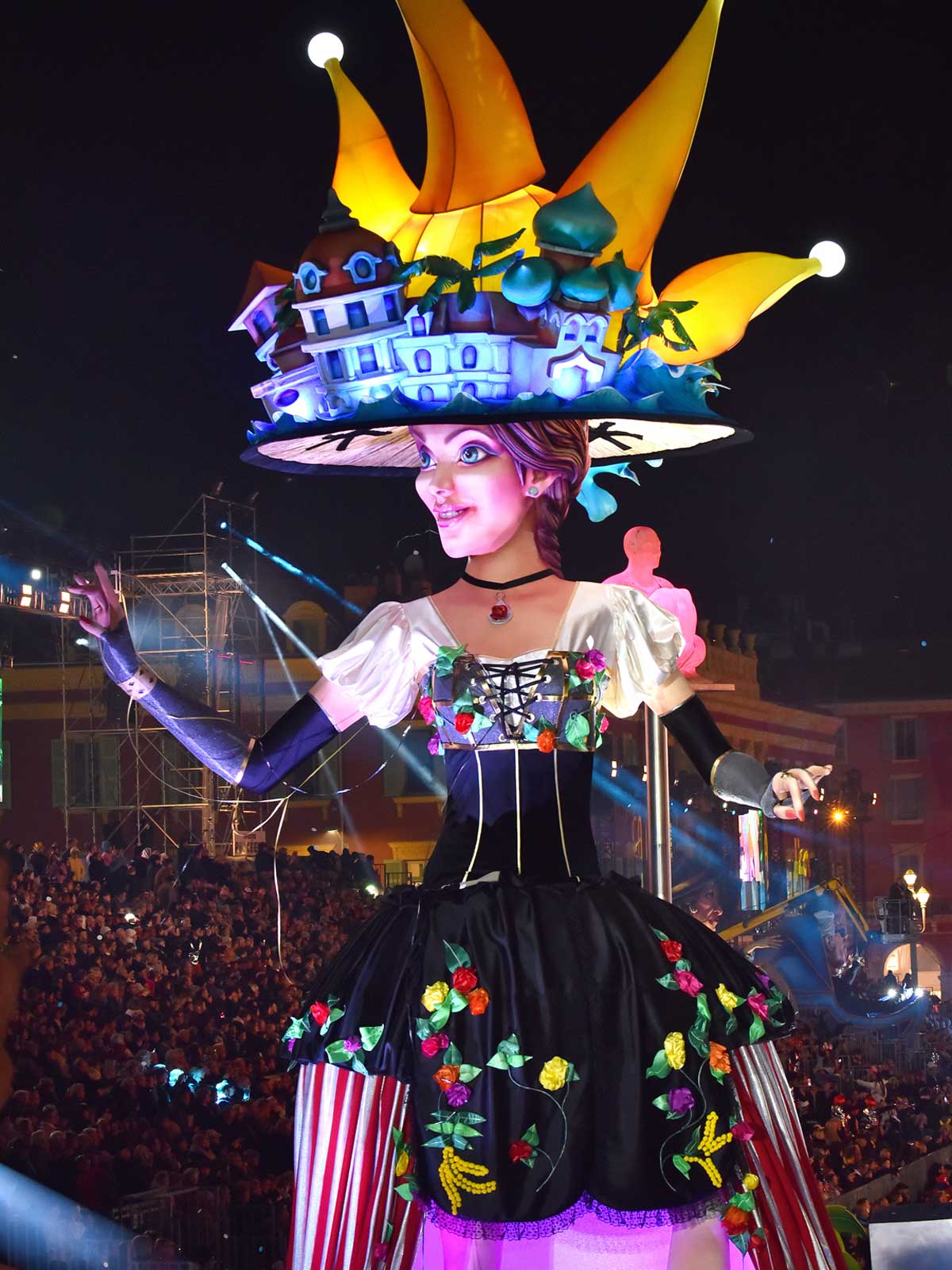
The Queen
In second position in the procession, having made her appearance in 1893, she married His Carnival Majesty, for her 21st birthday, according to an idea by Alexis Mossa.
Carnavalon
Is the prince, the child of the king and queen, who arrived later, in the 1930s

The Court
Floats
After the royal family, the king’s subjects on their floats adopt the theme of the year with humour and imagination. Each float has a name and represents a specific subject, linked to the theme. It expresses a humorous, fantastic or dreamlike world. On average, they’re about 12 m tall. Religious satire is prohibited, but caricatures of politicians have enjoyed a certain success at these parades.
Giant heads
Popular among the public, they follow the floats and entertain the crowd. The groups of giant heads are sculptures measuring approximately 2.50 m. Each group of giant heads is a series of characters covering the general theme of the carnival. From 800 giant heads in the sixties, they now number just a hundred, alongside the street art and musical troupes.
The giant heads can represent politicians, celebrities, actors from the media world … as well as the little people of Nice and tourists.
Carnival animals
The eagle
Is the symbol of the city of Nice, both on its coat of arms and as the mascot of our football team. Its frequent appearances in carnival parades are always much appreciated. It’s the inverted symbol of the bat, the animal-totem of the Nice carnival.
The dragon Babau
Is important in carnival mythology. Gigantic, mounted on bicycle wheels and pushed by 18 men, it measured 32 metres in 1905, created by Jarnach. It’s a universal symbol, found on every continent.
An entire band sits in its open mouth !
The Ratapignata
The inverted symbol of the eagle, empress of the world of Darkness, is also present in the parades. Among the most striking was the float of 1875 representing 40 bats on an old ruined castle. A positive symbol, which highlights the exceptional qualities of perception and intelligence of the bat (like that of the people of Nice) in the world of dark and obscure forces! O people of Nice who think ill of it !
The Cat Raminagrobis
Prince of cats celebrated by authors François Rabelais and Jean de La Fontaine, in 2008 embodied for the only time His Carnival Majesty in animal form in Kristian’s imagination.
The Troupes
The richness of Nice Carnival also comes from troupes from all over the world who parade alongside the floats, in the procession, each bringing their energy, culture and imagination, giving it a leading international position.
Invited by the Royal Family, street art troupes and musical groups from all over the world dance, sing or perform acrobatics. They take part in the festivities by sharing their worlds and cultures.
Major guest troupes
King Triboulet
In 1888, the Emperor of Brazil Pedro Il attended two flower parades and paraded in a flower carriage with his family.
In 2009, to mark the year of France in Brazil, the Samba School of Grande Rio paid tribute to the Carnival of Nice on the Triboulet float.
International troupes
Hungary, Belgium, Colombia, China – troupes from all over the world take their place at the Nice Carnival. Each troupe parades wearing the traditional costume of their country or region.
Brazilian dancers
Echoing the Rio Carnival, samba dancers are essential guests at our carnival.
Italian troupes
Italian troupes showcase the ancient art of flag throwing that dates back to the Middle Ages. These exercises, as difficult as they are breathtaking, require mastery and passion.